Most homeowners only think about their boiler when it stops working. By that point the old unit is already failing, the house is cold, and there is pressure to make a quick decision on something that will run every day for the next ten to fifteen years. A little knowledge beforehand takes the stress out of the process. This guide covers what actually matters when choosing a new boiler, from the type and size that suits your home to the brands worth trusting and what you will pay.
Combi, System or Conventional?
There are three types of gas boiler, and the right one depends on how your home is set up and how you use hot water.
- Combi boilers: The most popular choice in the UK today. A combi heats your home and provides hot water on demand without any separate cylinder or water tank. Hot water is instant, there is no tank taking up space in the loft, and the system is simpler to maintain. Combis suit most modern homes and flats, particularly those with one or two bathrooms. The limitation is flow rate: if two showers run at the same time the pressure can drop.
- System boilers: These work with a hot water cylinder to store hot water, but do not need a separate cold water tank in the loft. The boiler takes its supply directly from the mains. A good choice for larger homes where several taps and showers may run simultaneously, giving a stronger, more consistent flow than a combi can deliver at peak times.
- Conventional boilers (heat only): The traditional setup, requiring both a cold water tank in the loft and a hot water cylinder. Generally chosen only when replacing an existing conventional system, particularly in older properties where the pipework and tank layout make conversion complex or expensive. Less common in new installations today.
If you are replacing a like-for-like system, switching type is often possible but adds cost. Gary will assess your home and explain clearly which options are practical before you commit to anything.
Sizing Your Boiler Correctly
Boiler output is measured in kilowatts (kW). Getting the size right matters more than most people realise. An undersized boiler works too hard and never quite keeps up; an oversized one cycles on and off constantly, wearing itself out and wasting gas.
- Small homes and flats (1–2 bedrooms, 1 bathroom): A combi in the 24–28 kW range is usually sufficient. Hot water demand is modest and the boiler can manage it without oversizing.
- Medium homes (3–4 bedrooms, 1–2 bathrooms): A 28–35 kW combi or a system boiler in a similar range. The right choice depends on peak hot water demand and how well the house is insulated.
- Larger homes (4+ bedrooms, 2+ bathrooms): A high-output combi of 35–40 kW, or more likely a system boiler with a cylinder, to handle simultaneous demand without pressure loss.
- Insulation matters: A well-insulated home can often step down a size, reducing the unit and running costs. If your walls and loft are insulated, mention that when getting quotes.
A proper heat loss calculation, carried out during the pre-installation survey, is the right way to size a boiler. Rules of thumb are a starting point; your home's actual fabric and layout determine the correct answer.
Brands We Recommend
There are dozens of boiler brands on the market and the quality varies considerably. At GJS we consistently recommend three: Vaillant, Ideal and Baxi. Here is why.
- Vaillant: A German-engineered brand with a strong reputation for reliability and build quality. Vaillant boilers tend to be well made, quiet in operation, and backed by a solid warranty. Parts are widely available, which keeps repair costs sensible if something goes wrong years down the line. A good premium choice when you want the boiler to run without drama for a long time.
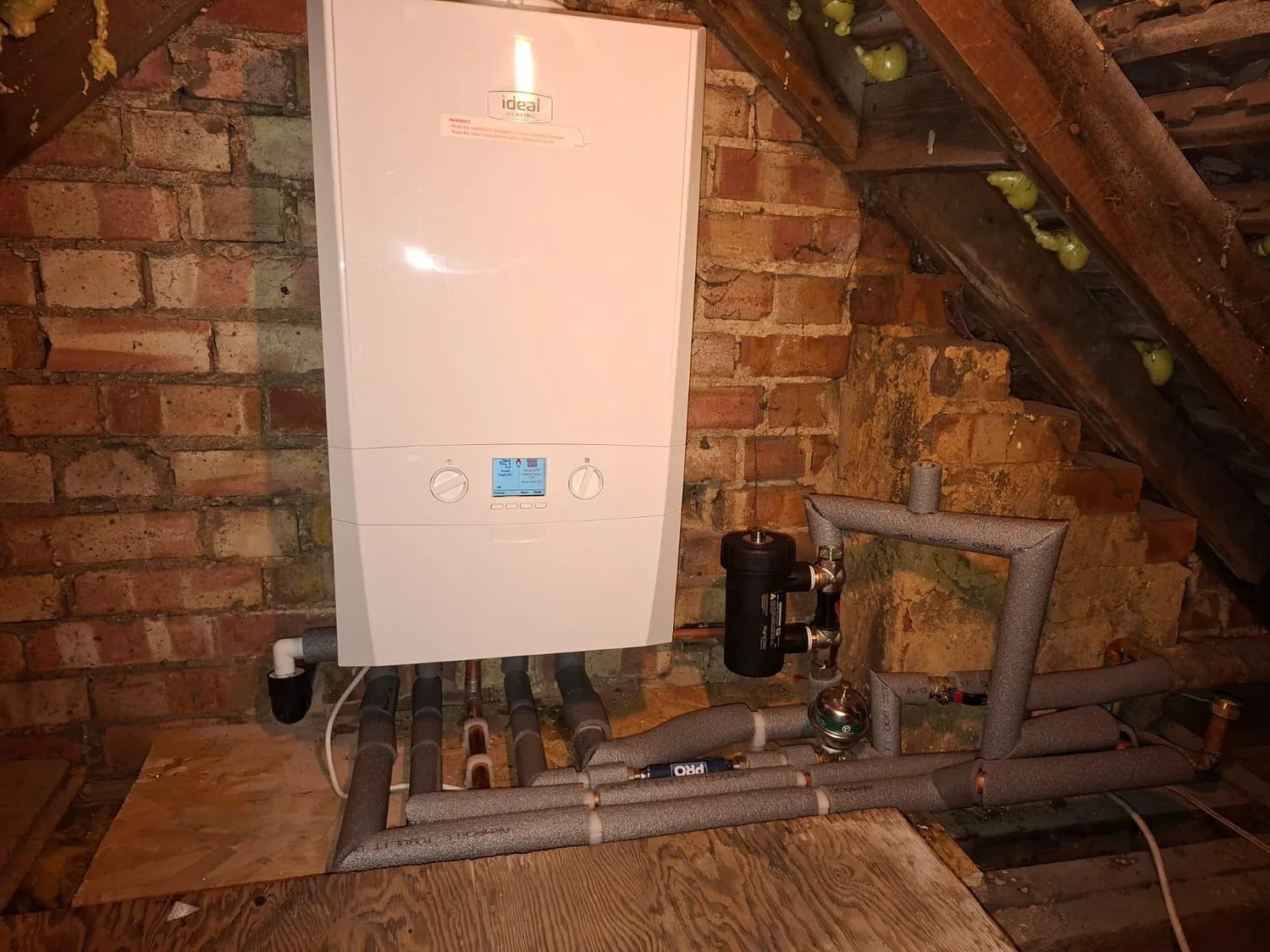
- Ideal: A UK brand that offers strong value for money. Ideal boilers are straightforward to install, perform reliably, and the warranty terms are competitive. A solid mid-range choice for homeowners who want good quality without the top-tier price tag.
- Baxi: Another UK brand with a long track record. Baxi boilers are widely installed across the country, parts are easy to source, and the range covers most home types and budgets. Reliable everyday performance at a fair price.
Gary will recommend the specific model that fits your home and budget, not simply the most expensive unit on the list. All three brands offer manufacturer warranties; the exact length depends on the model and whether you register within the required period, which GJS does on your behalf.
Not Sure Which Boiler Is Right for You?
Call Gary on 07740 187249. GJS Plumbing & Heating provides free, no-obligation quotes and honest advice for boiler installation across Essex.
Call for a Free QuoteEfficiency and Running Costs
All modern gas boilers sold in the UK must be condensing boilers, which means they recover heat from the flue gases that older boilers wasted. An A-rated condensing boiler operates at around 90% efficiency, meaning 90p of every £1 spent on gas goes into heating your home. An older boiler from fifteen years ago may be running at 70–75%, sometimes lower.
- ErP rating: Boilers are labelled A through G under the Energy-related Products directive. Look for an A-rated unit. Most boilers from reputable brands achieve this, but check the label before agreeing to a specific model.
- Smart controls: Pairing a new boiler with a modern programmable or smart thermostat can cut heating bills further. Boilers work most efficiently when they run at a steady, lower flow temperature rather than cycling between extremes.
- Weather compensation: Some higher-end models and control systems adjust the boiler's output based on outside temperature. Worth considering if running cost reduction is a priority.
- Magnetic filter: Fitting a magnetic system filter (such as a Magnaclean) protects the boiler from sludge that builds up in older heating systems. It is a relatively small addition that can extend boiler life and maintain efficiency.
What to Expect on Installation Day
A straightforward boiler swap is typically completed in a single day. A more involved installation, such as moving the boiler location or changing boiler type, can run to two days. Here is how the day unfolds.
- Arrival and preparation: Gary arrives at the agreed time and protects your floors and work area before anything starts. There are no surprises on pricing at this stage; the written quote you received covers the work.
- Removing the old boiler: The old unit is isolated, drained down and removed safely. Disposal is included; you do not need to arrange anything.
- Fitting the new boiler: The new unit is positioned, pipework is connected or modified as needed, and flue routing is completed. The condensate pipe is routed to the nearest drain.
- Commissioning and testing: Once fitted, the system is filled, pressure tested and fired up. Every safety device is checked, the controls are set, and the boiler is run through its full cycle before Gary signs off.
- Handover: Gary walks you through the controls so you know how to set your heating and hot water schedules. He registers the manufacturer warranty on your behalf and leaves you with all the relevant certificates.
When the job is done, the work area is left clean and tidy. GJS has always worked that way.
Cost Guide
Boiler installation costs in Essex typically fall in the range of £2,000–£5,000, depending on the boiler chosen, the complexity of the existing system, and whether any additional work is needed.
- Like-for-like combi replacement: Usually at the lower end of the range. The pipework is already in place, so the labour element is straightforward.
- System boiler with cylinder: Mid-range. A hot water cylinder adds to material and labour costs but is the right solution for homes with higher demand.
- Relocating the boiler: Moving a boiler to a new position adds cost because new flue routing and pipework runs are required. Worth doing if the new position is more practical, but factor it in.
- Additional work: Magnetic filters, new thermostats, inhibitor dosing and upgrading old pipework can add cost. These are all discussed and quoted before work starts, not added on afterwards.
GJS provides a clear written quote after visiting your home, covering everything included in the price. There are no hidden extras.
Frequently Asked Questions
For most three-bedroom homes with one bathroom a combi boiler works well and keeps the installation simple. If you have two bathrooms and a family that uses both showers at the same time, a system boiler with a hot water cylinder gives a stronger, more consistent flow. Gary will assess your home and give you a clear recommendation.
A well-maintained boiler from a reliable brand typically lasts between 10 and 15 years, sometimes longer. Annual servicing is the single biggest factor. A boiler that is serviced every year runs more efficiently, faults are caught early, and the manufacturer warranty stays valid.
No. Gary will suggest what he believes represents the best value and reliability for your home, but the final choice is yours. He can install other brands and will give you an honest view of any model you are considering so you can make an informed decision.
Yes. Removing and disposing of your old boiler is included as part of the installation. You do not need to arrange skip hire or make any separate disposal arrangements.
After installation you receive a Boiler Installation Certificate and a Gas Safety Certificate. GJS also registers the manufacturer warranty on your behalf. Keep these documents safely; your insurer or future buyer may ask for them, and they are required for any warranty claims.
Ask to see the engineer's Gas Safe ID card before work starts. You can also verify any registered engineer independently at gassaferegister.co.uk. Gary is a qualified, Gas Safe registered gas engineer and is happy for you to check. Gas work carried out by an unregistered person is illegal and will void your warranty and insurance.